If you want a home that feels connected, convenient, and easier to maintain, Chamblee deserves a closer look. This part of DeKalb County has spent years planning for a more walkable, mixed-use downtown, which makes it especially appealing if you like the idea of townhome or loft-style living near transit, dining, and everyday services. In this guide, you’ll get a practical look at where to focus, what these homes tend to offer, and what tradeoffs to weigh before you buy. Let’s dive in.
Why Chamblee fits attached living
Chamblee has positioned its downtown around transit-oriented, mixed-use growth for years. City planning documents describe a goal of creating a dense, walkable environment near the MARTA station, with street design and block sizes intended to support an active mixed-use district.
That matters if you are shopping for a townhome or loft-style home. In many places, attached housing can feel like an afterthought. In Chamblee’s downtown and station-area hotspots, it is part of a broader plan for everyday convenience, pedestrian access, and a more urban rhythm of life.
The city also describes Chamblee as a rail town about 14 miles from downtown Atlanta, anchored by a heavy-rail MARTA station, historic downtown and Antique Row, and the Buford Highway Corridor. Together, those areas help explain why attached housing feels like a natural fit here rather than a niche option.
Where to look in Chamblee
Downtown Chamblee and Broad Street
Downtown Chamblee, including Broad Street, is one of the clearest hotspots for buyers who want an urban, low-maintenance lifestyle. Official planning documents describe this area as a compact mixed-use core, and the city notes that Antique Row runs along Broad Street with multiple restaurants locating there in recent years.
For you as a buyer, that translates into a setting where housing is tied closely to street life. You are not just looking at a home. You are also looking at how easily you can step out for dinner, run a quick errand, or enjoy a more walkable routine.
Chamblee MARTA station area
The area around Chamblee MARTA Station is another standout. The station is on MARTA’s Gold Line and includes bus connections, Zipcar access, and more than 1,700 surface parking spaces, with free parking for less than 24 hours.
That mix gives you flexibility. If you want to use transit more often, the station-area location supports that. If you still rely on a car for part of your week, the existing parking and mobility options can make the transition to a more connected lifestyle feel more practical.
Buford Highway Corridor
The Buford Highway Corridor is also part of Chamblee’s identity. The city identifies it as one of Chamblee’s signature urban corridors alongside historic downtown and Antique Row.
If you are drawn to areas with a more active urban feel, this corridor adds to Chamblee’s appeal. It helps reinforce that the city’s attached-home story is about more than one block or one development. It is about a broader pattern of mixed-use, connected growth in key areas.
What Chamblee townhomes are like
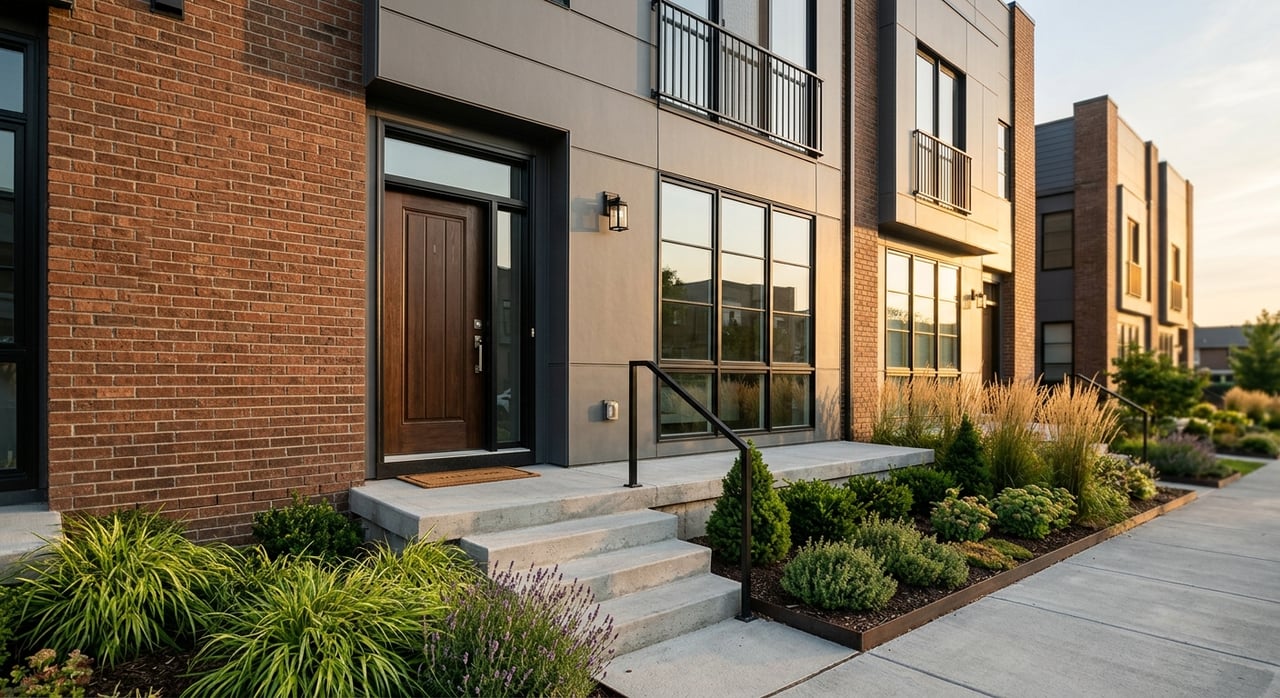
In the Downtown Chamblee Town Center PUD, townhouses are defined as attached buildings with three or more dwelling units separated by common side walls, with three to eight units per building. That gives you a good picture of the type of product planned in the downtown core.
Just as important, the layout standards are designed to support a more pedestrian-friendly streetscape. For townhomes that face a street or the Rail Trail, entrances are required to face that public edge, and off-street parking is not allowed between the building and the street.
That design choice changes how a block feels. Instead of garage doors dominating the front, the plan pushes homes to engage the street more directly. Townhouse garages are intended to be reached from an alley or shared driveway rather than facing the street head-on.
For buyers, that often means a cleaner look and a more walkable environment. It can also mean a slightly different day-to-day setup than a traditional suburban townhome, so it helps to think about how much you value front-door street access versus a more car-centered layout.
What loft-style living means here
When buyers hear the word “loft,” they often picture old warehouse conversions with exposed brick and industrial details. In Chamblee, the more realistic expectation is usually newer stacked flats or mixed-use apartment-style product rather than classic industrial conversions.
The downtown standards define a flat as a building with three or more vertically and horizontally integrated units. The standards also call for all stories to have ceiling heights between 9 and 16 feet, with street-facing entrances required for lobbies and ground-floor units along street or Rail Trail frontages.
That means you may still find some of the features that draw people to loft-style living, like taller ceilings and a more urban building form. What you are less likely to find is a true converted industrial building. In Chamblee, loft-style usually means modern, mixed-use, and connected to the street.
Features buyers may appreciate
Several downtown standards speak directly to everyday comfort. At least 50% of multifamily units must include a balcony of 32 square feet or more, which suggests that private outdoor space is part of the planning vision rather than an afterthought.
The standards also say that no more than 60% of multifamily units may be under 800 square feet. That is helpful if you want an urban home but do not want a district built only around very small units.
Sound control is another detail worth noting. Shared walls and floors between units must meet an STC rating of 50 or higher, which shows that the plan is accounting for noise separation in attached living environments.
Taken together, these standards point to a downtown product that aims to balance urban density with livability. You still need to evaluate each property on its own merits, but the planning framework gives useful clues about what many buyers will value here.
Why daily life feels convenient
One of the biggest advantages of townhome and loft living in Chamblee is that the appeal goes beyond the home itself. The Town Center land-use table allows groceries, shopping centers, restaurants with outdoor dining, brew pubs, taprooms, bicycle sales and repair shops, and personal-service uses.
That mix matters because it supports real daily convenience. You are not relying only on a nice floor plan or stylish exterior. You are buying into an area planned to make errands, dining, and small services more accessible.
The city’s planning also incorporates Rail Trail connections and last-mile access to the MARTA station. The safest way to think about the Rail Trail is as an evolving amenity and a sign of Chamblee’s pedestrian-first planning, rather than a fully built citywide network.
Live-work potential in downtown Chamblee
If you work from home or run a small business, Chamblee’s downtown standards include another interesting option: live-work units. In the Town Center PUD, a live-work unit must be at least 2,400 square feet and include at least 500 square feet of nonresidential space on the ground floor oriented to the street.
That setup will not fit every buyer, but it can be appealing if you want a home with a true office, studio, or client-facing component. It is one more example of how Chamblee’s planning encourages flexible, mixed-use living in the downtown core.
Tradeoffs to consider before you buy
The strongest case for Chamblee’s townhomes and loft-style homes is clear. You get a lower-maintenance, transit-linked lifestyle in a city that has intentionally planned for walkability and mixed-use density.
The tradeoff is that attached living comes with shared systems, compact footprints, and often some form of HOA governance. That does not make it a downside by default, but it does mean you should be honest about your preferences before you buy.
If you want a detached home with more separation, more private outdoor space, and fewer shared decisions, this may not be your best fit. If you value location, easier upkeep, and a more connected everyday routine, Chamblee’s hotspots may feel like a smart match.
Budget for the full monthly cost
When you compare homes, it is important to look beyond the mortgage payment. For attached homes, your total monthly cost may include principal, interest, property taxes, mortgage insurance, homeowner’s insurance, HOA fees, utilities, and ongoing maintenance.
HOA or condo fees are often paid separately from the mortgage, and they can vary widely. Those fees may help cover shared expenses like landscaping and maintenance, and in some condo settings they may also relate to shared structures, roofs, or driveways.
This is one area where careful review matters. Before you commit to a townhome or loft-style property, make sure you understand what the monthly fees cover, what rules apply, and how those costs fit into your broader budget.
How to shop smart in Chamblee
If you are serious about buying in Chamblee, it helps to focus your search around the downtown core, the station area, and other mixed-use pockets rather than assuming every part of the city offers the same townhome or loft experience. The most detailed standards in the research apply specifically to the Downtown Chamblee Town Center PUD.
That means one development may feel very different from another. As you tour homes, pay close attention to the block layout, parking access, building orientation, outdoor space, and how easily you can reach the places you plan to use most.
A thoughtful home search here is about lifestyle fit as much as square footage. If you want help narrowing the right pockets, comparing attached-home options, or evaluating whether Chamblee aligns with your commute and day-to-day priorities, working with an agent who understands metro Atlanta’s neighborhood differences can make the process much clearer.
Whether you are relocating, downsizing upkeep, or simply looking for a more connected way to live, Chamblee offers a compelling mix of transit access, walkability, and modern attached housing. If you want personalized guidance as you compare Chamblee with other metro-Atlanta options, Erin Olivier can help you move forward with dependable communication and neighborhood insight.
FAQs
What is townhome living like in Downtown Chamblee?
- In the Downtown Chamblee Town Center PUD, townhomes are planned as attached homes with three to eight units per building, with entries facing the street or Rail Trail and garages typically accessed from alleys or shared driveways.
What does loft-style living usually mean in Chamblee?
- In Chamblee, loft-style living is more likely to mean newer stacked flats or mixed-use residential buildings with taller ceilings and street-oriented design, rather than older industrial warehouse conversions.
What areas in Chamblee are best for townhomes and lofts?
- Downtown Chamblee and Broad Street, the Chamblee MARTA station area, and parts of the Buford Highway Corridor are key hotspots tied to the city’s mixed-use and transit-oriented planning.
What amenities support daily life near Downtown Chamblee?
- The Town Center plan allows uses like groceries, restaurants with outdoor dining, shopping, bicycle repair, and personal services, which helps support a more convenient daily routine.
What costs should buyers consider for Chamblee townhomes or condos?
- In addition to the mortgage, you should review property taxes, insurance, HOA fees, utilities, and maintenance so you understand the full monthly carrying cost before buying.